Energy Efficiency of Heated Gutter Guards: What Helmet Heat Costs to Run
Homeowners who have priced heated gutter protection usually stall at the same place. The installation number is knowable. The operating cost is not, because almost nobody publishes one, and the few figures floating around online come from a different kind of product entirely.
That uncertainty is fair, and it deserves a real answer rather than a reassurance. Here is how the electrical side of Helmet Heat actually works, what determines the draw, and how to estimate a season for your own home. Gutter Helmet of Denver installs these systems across the Front Range, so this reflects what we see in practice rather than a spec sheet in isolation.
Self-regulating cable is the whole story
The single most important thing to understand is that Helmet Heat does not use constant-wattage cable.
Older roof heating products, and most of the hardware-store heat tape still sold today, draw a fixed amount of power whenever they are plugged in. A 6-watt-per-foot constant-wattage cable pulls 6 watts per foot at 10 degrees and 6 watts per foot at 45 degrees. It cannot tell the difference, which is why people plug them in during November and get a January utility bill they did not expect.
Self-regulating cable works differently. The conductive core between the two bus wires changes resistance with temperature. When the cable is cold, resistance drops and more current flows. As the cable warms, resistance rises and output falls. This happens continuously and independently along every inch of the run.
The practical consequence is that the cable throttles itself. A section buried under snow in a shaded north-facing valley draws near its maximum. A section in direct afternoon sun twenty feet away, on the same circuit, drops to a fraction of that. You are not paying to heat cable that does not need heating.
This is the core mechanical difference covered in our comparison of Helmet Heat and other roof heating cables, and it is also the reason the safety profile is different, which we address in Helmet Heat versus heat tape.
What drives your actual consumption
Four variables determine what a season costs you, and only one of them is about the product.
Linear footage. Power draw scales with the length of cable installed. A system protecting two problem valleys and forty feet of north-facing eave uses meaningfully less than one running the full perimeter of a large home. Most homes do not need full coverage, and a good design targets the sections that actually form ice.
Hours of operation. Cable that is not energized costs nothing. This is where control strategy matters more than anything else on this list, and we will come back to it below.
Ambient temperature during those hours. Because output varies with temperature, the same system costs more during a sustained cold snap than during a mild week with overnight dips.
Your electricity rate. Front Range residential rates vary by provider and by rate plan, and some plans price peak hours differently. Your rate per kilowatt-hour is on your utility statement and is worth pulling before you estimate anything.
How to estimate your own seasonal cost
You can build a reasonable estimate with arithmetic once you have a quote in hand.
The method matters more than any number we could publish, because footage varies so much between homes.
- Get the installed linear footage and the cable's rated output per foot from your installer. Self-regulating cable is rated at a specific temperature, so ask what that rating temperature is.
- Multiply footage by watts per foot, then divide by 1,000 to get kilowatts at full output.
- Estimate energized hours for the season. Be realistic about how your control method works.
- Multiply kilowatts by hours to get kilowatt-hours, then by your utility rate.
- Discount the result, because self-regulating cable spends very little of its runtime at full rated output.
That last step is the one people skip, and it is why naive estimates overshoot. A system that never reaches its rated temperature in practice will not draw its rated wattage in practice.
Ask your installer to run this calculation using your home's measured footage. Any reputable installer should be willing to. If someone quotes you a flat seasonal cost without knowing your footage or your rate, treat that number as marketing rather than math.
Control strategy is where the savings actually live
Two identical systems on two identical homes can differ substantially in seasonal cost based entirely on how they are switched.
Manual switching is the cheapest to install and the most expensive to run, because it depends on someone remembering. The common failure is turning it on at the first snow in October and forgetting it until April.
Months of unnecessary runtime dwarf any hardware savings.
Thermostatic control energizes the circuit only within a temperature band. Below the band there is no liquid water to manage. Above it, ice is not forming. This alone eliminates a large share of wasted runtime.
Moisture-sensing control adds the second condition, energizing only when the temperature is in range and moisture is actually present. A dry cold snap in January produces no meltwater, so there is nothing to keep moving.
If operating cost is a priority for you, this is the conversation to have during design, not after installation. Retrofitting controls later is possible but less convenient than specifying them up front.
Where heated protection is worth the electricity
Running any resistive heat is a cost, so it should be aimed at a real problem.
Helmet Heat earns its consumption on homes with specific conditions:
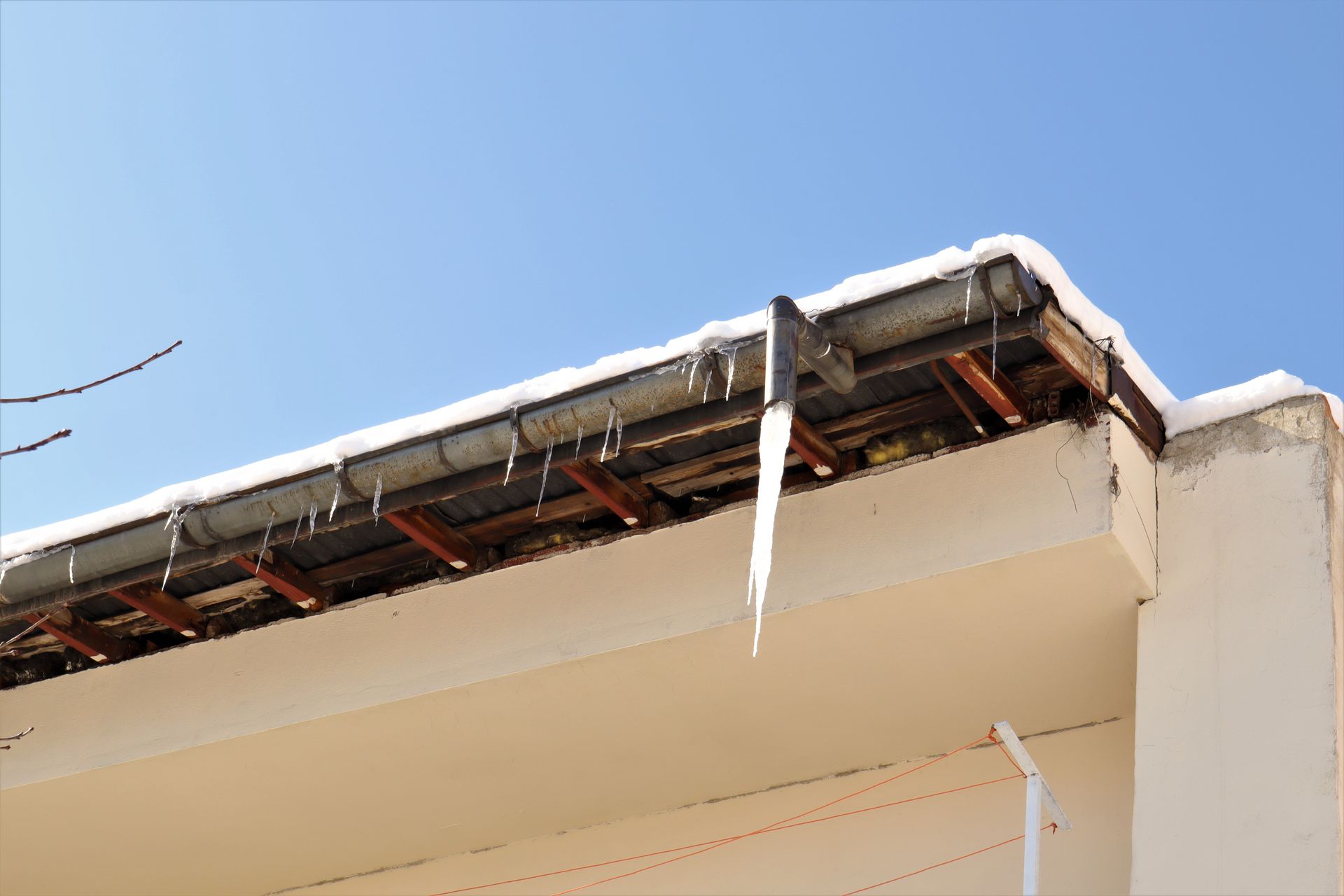
- North-facing eaves that stay shaded and refreeze while the rest of the roof drains
- Valleys that concentrate meltwater into a narrow path
- Rooflines above heated living space where interior heat loss drives melting from below
- Homes with a documented history of ice buildup at the same locations each winter
- Properties where the alternative is repeated roof or interior repair
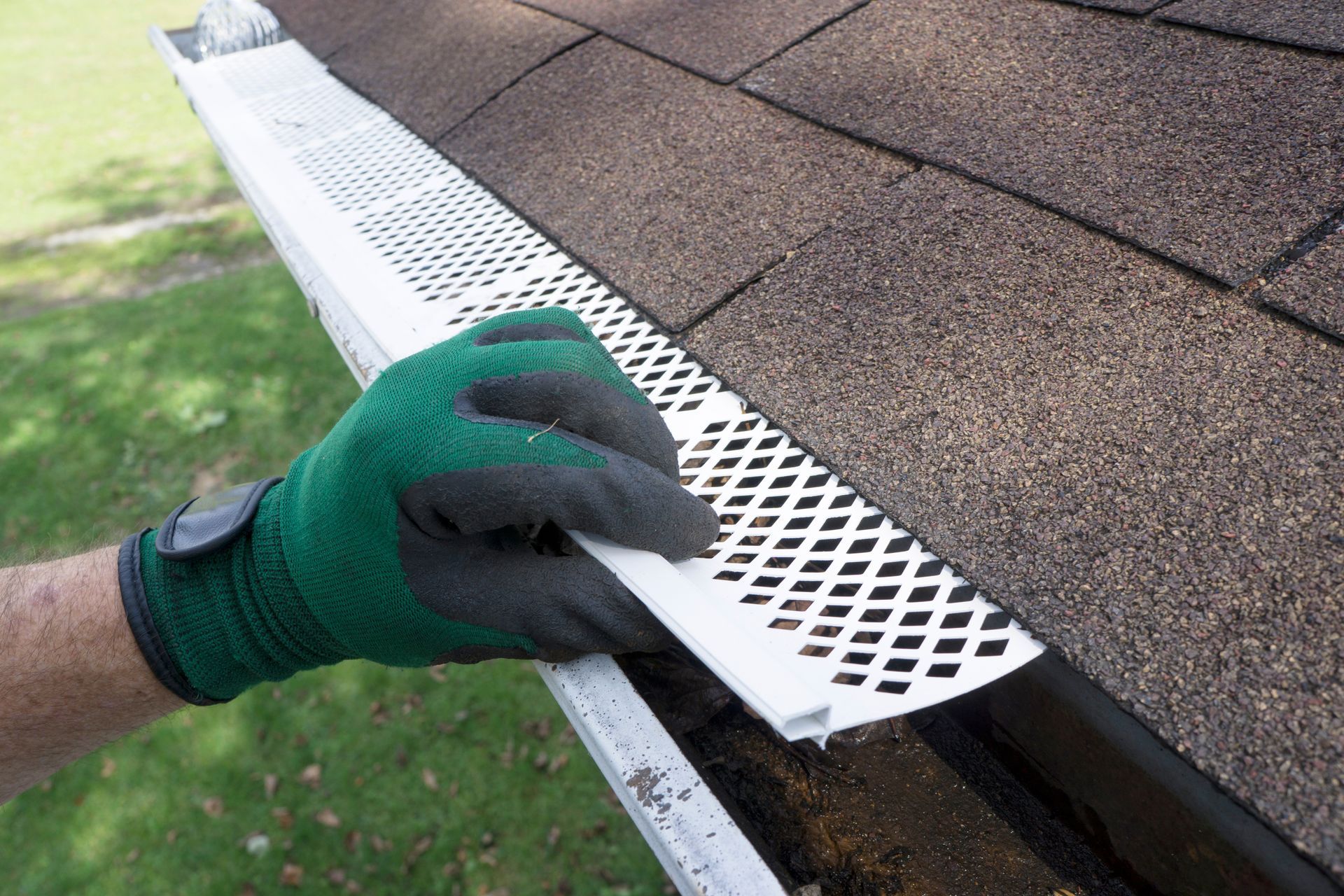
On a home without those conditions, the more efficient answer is keeping the drainage path clear and letting it drain, which is the role of gutter protection on its own. Our guide to preventing ice dams with Gutter Helmet covers what the cover does independently of any heat system.
Frequently asked questions
How much electricity does a heated gutter system use?
It depends on installed footage, hours energized, and outdoor temperature. Self-regulating cable varies its draw continuously rather than pulling a fixed wattage, so consumption is lower than a constant-wattage calculation would suggest. Ask your installer for footage and cable rating to estimate your own.
Is self-regulating heat cable more efficient than heat tape?
Yes, in operating terms. Constant-wattage heat tape draws the same power regardless of conditions. Self-regulating cable reduces output as it warms, so sun-exposed and already-warm sections consume less.
Does Helmet Heat run all winter?
It should not. With thermostatic or moisture-sensing control it energizes only when conditions can actually produce ice. Systems on manual switches tend to run far longer than necessary.
Can I run it only during storms? With moisture-sensing control, essentially yes. The system responds to actual conditions rather than to the calendar.
Does the system add much to a winter utility bill?
That varies by home and cannot be answered honestly without your footage and rate. What can be said is that the two largest levers are how much cable you install and how it is controlled, and both are decisions made before installation.
Get a number based on your roof
Operating cost is a function of your footage, your control method, and your utility rate, which means the only accurate estimate is one built from your home. Our article on what to expect during a winter installation explains how the assessment works.
If you want that calculation done properly,
contact us to schedule an assessment and we will identify which sections actually need heat, measure the footage, and walk you through the control options before you commit.
You might also like