How Gutter Guards Protect Landscaping from Water Damage
For most homeowners, the conversation about gutter protection centers on the house itself. Fascia rot, foundation erosion, and basement flooding. These are the outcomes that get the most attention, and rightfully so. But Gutter Helmet of Denver regularly works with homeowners who discover that their landscaping has been quietly absorbing the consequences of poor gutter drainage for years before the structural damage to the home becomes obvious.
Landscaping represents a significant investment for most Denver and Front Range homeowners. Mature trees, established garden beds, retaining walls, sod, and hardscaping elements like stone paths and decorative borders can easily represent tens of thousands of dollars of accumulated investment over time. Watching that investment erode, literally, because of a gutter system that can't handle Colorado's fall storm pattern is a frustrating and entirely preventable outcome.
This article covers exactly how inadequate gutter drainage damages landscaping, why fall storms in Colorado make the problem worse, and how a properly engineered gutter protection system controls water flow in a way that preserves the landscape around your home.
How Overflowing Gutters Damage Landscaping
The connection between gutter performance and landscaping health isn't always intuitive until you watch what actually happens during a heavy rain event. When gutters overflow, the water doesn't disperse evenly around the home. It concentrates at the lowest points of the gutter run, typically at corners and at any section where debris has created a partial dam, and pours to the ground in a focused stream.
That concentrated stream carries considerably more erosive force than distributed rainfall. A garden bed directly below an overflowing gutter section experiences the equivalent of a small waterfall landing on it repeatedly through every storm of the season. The results are predictable and cumulative.
Soil Erosion and Bed Destruction
Concentrated overflow strips topsoil, displaces mulch, and exposes plant roots. In established garden beds, this kind of repeated impact compacts the soil surface, reduces its ability to absorb water, and creates channels that direct future runoff toward plant root zones rather than away from them. Plants that survive the initial impact often struggle in subsequent seasons because the soil structure around their roots has been fundamentally compromised.
In Denver's Front Range climate, where good topsoil is harder to establish and maintain than in wetter regions, losing it to preventable gutter overflow is a particularly costly outcome. The importance of gutter maintenance in Denver's climate extends well beyond the roofline when the cascading effects on landscaping are factored in.
Retaining Wall and Hardscape Damage
Retaining walls are particularly vulnerable to concentrated water discharge. Most retaining walls, whether timber, boulder, or concrete block, are designed to manage gradual soil moisture, not repeated concentrated water impact. Overflow that lands at the base of a retaining wall saturates the soil behind it, increases hydrostatic pressure, and over time causes leaning, shifting, and eventual failure.
Hardscape elements like stone paths, decorative gravel, and paver patios are similarly affected. Concentrated overflow washes gravel out of beds, undermines the sand base beneath pavers, and creates low spots and settling that are expensive to repair properly.
Plant Loss and Root Damage
Beyond the immediate physical damage to soil and hardscape, concentrated water discharge creates conditions that kill plants directly. Prolonged root saturation from repeated overflow events causes root rot in plants that aren't tolerant of wet conditions. Conversely, the erosion that overflow causes can expose roots to air and drying, creating the opposite problem in the same planting area.
Mature trees and shrubs that took years to establish are not immune. Repeated soil disturbance around the root zone stresses established plants and makes them more susceptible to disease and pest pressure. Clogged gutter damage reaches further into the landscape than most homeowners expect until they start connecting the dots between their gutter performance and their landscaping health.
Why Fall Storms Make This Worse in Colorado
Fall is the season when gutter drainage stress and landscaping vulnerability intersect most sharply in Colorado. September and October bring a combination of factors that amplify the landscaping damage risk significantly.
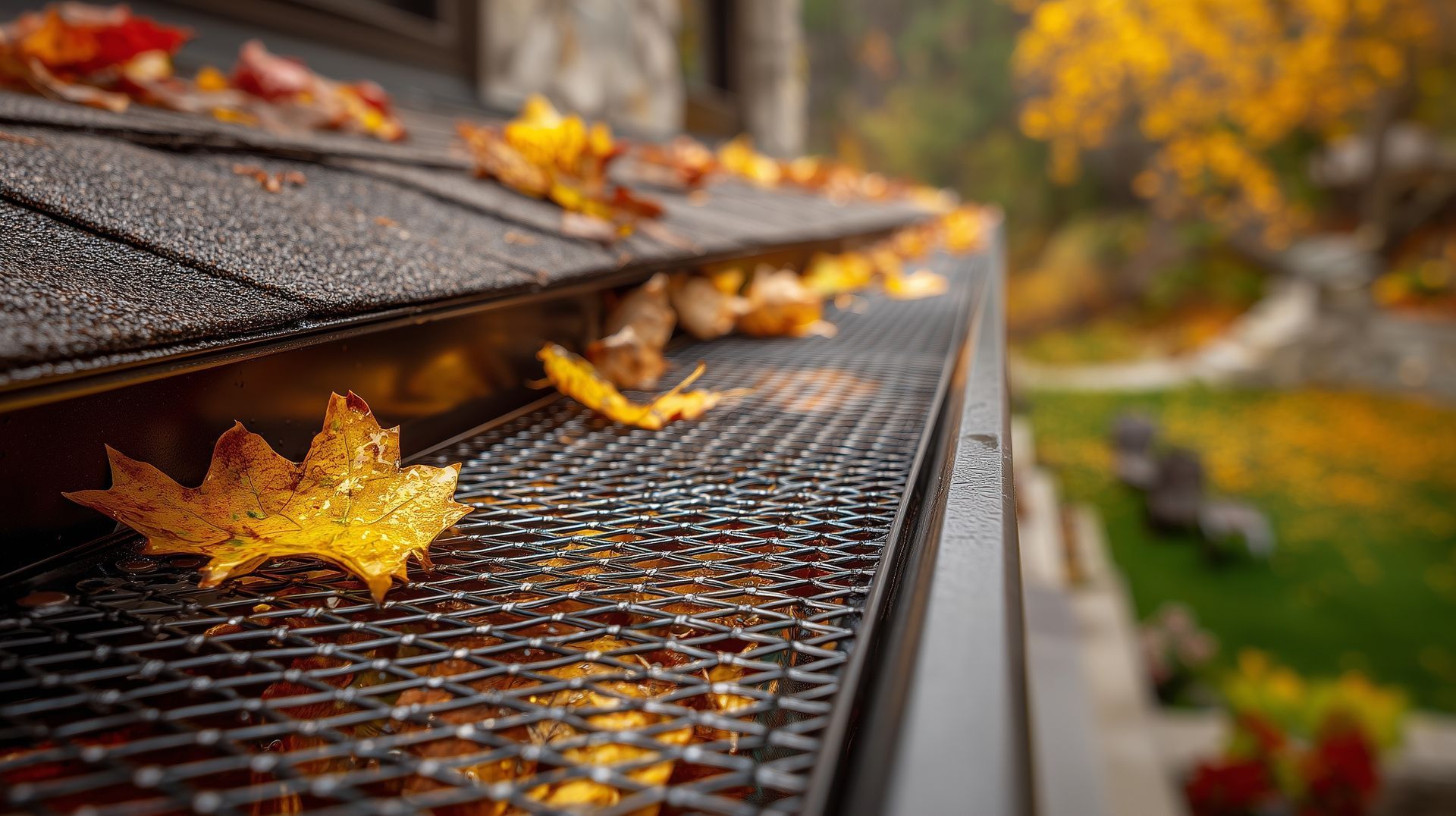
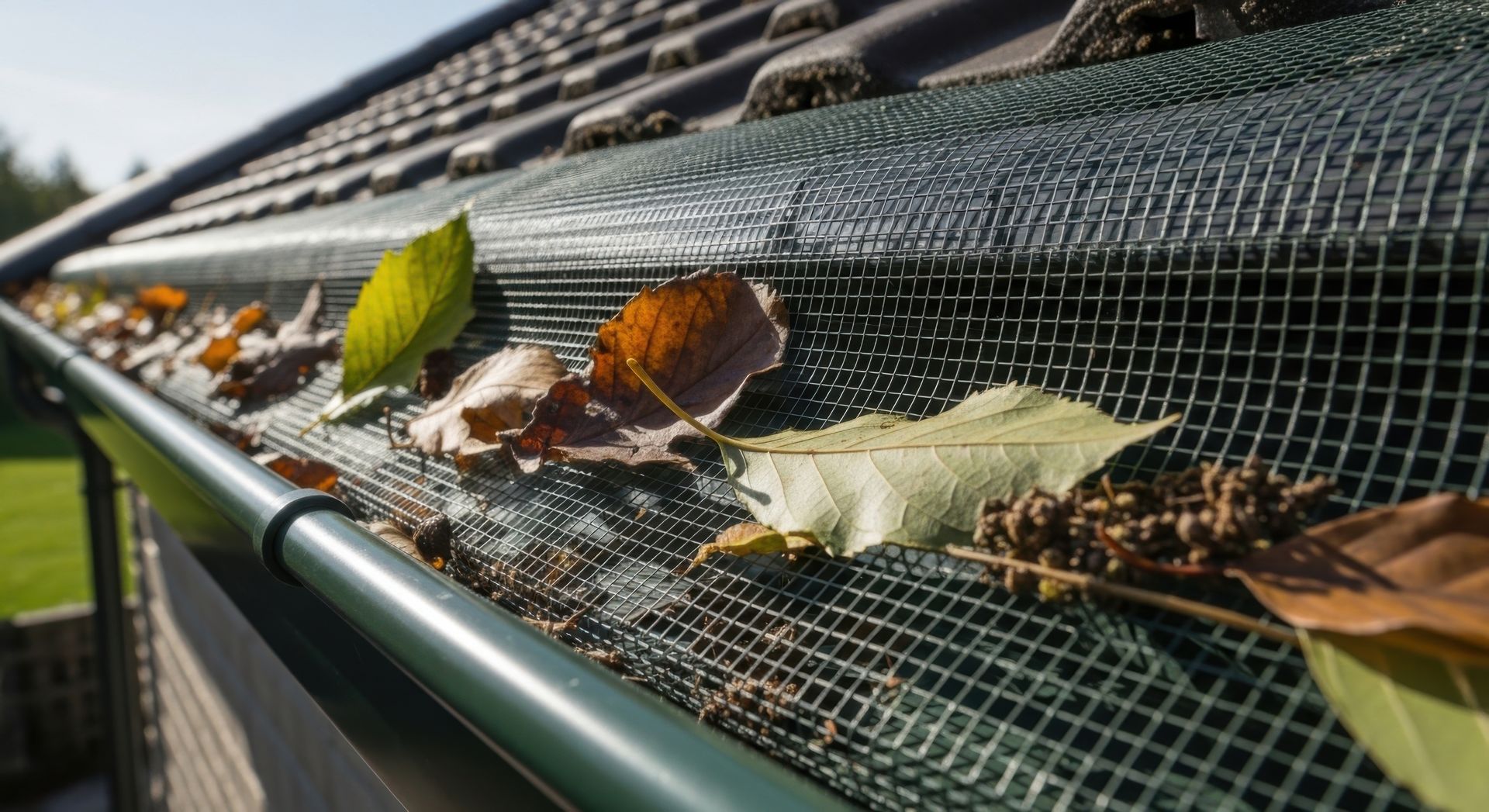
Debris accumulation peaks in fall. Leaves, pine needles, and seed pods from cottonwood and other deciduous trees load gutters faster in fall than at any other point in the year. An unprotected or partially protected gutter system that managed adequately through summer often reaches its capacity limits quickly as fall debris builds up. Fall gutter prep and why early protection matters is particularly relevant for homeowners who have invested significantly in their landscaping.
Colorado's fall storm pattern is also more variable and intense than many homeowners anticipate. The same orographic lift that drives summer thunderstorms continues into fall, and early-season snowstorms can arrive before landscaping has fully prepared for winter. A gutter system overwhelmed by a combination of debris load and heavy rainfall delivers concentrated overflow to landscape areas that are still actively growing and therefore more vulnerable to physical damage.
At the same time, fall is when most landscaping investments are most visible and most valued. The effort and expense of a summer's worth of planting, mulching, and maintenance are on full display in September and October. Protecting that investment through fall storm season is a concrete argument for having gutter protection in place before the season begins rather than after.
How Gutter Guards Control Water Flow to Protect Landscaping
The core value of a gutter guard system for landscaping protection is simple: it keeps the gutter system functioning at full capacity through the debris-heavy fall season, which means water is channeled through downspouts and discharged at designated points rather than overflowing at random locations across the roofline.
A gutter system that flows freely directs water to downspout locations that can be managed with splash blocks, downspout extensions, or drainage systems designed to disperse water away from sensitive landscaping areas. This is a controllable outcome. Gutter overflow is not.
How Gutter Helmet protects your home from clogs and overflow is directly relevant to landscaping protection because every gallon of water that exits through a downspout is a gallon that isn't pouring over the edge of a gutter onto a garden bed or retaining wall below.
Debris Shedding Through Fall Season
Gutter Helmet's solid-surface design sheds leaves, pine needles, and other fall debris rather than collecting them. As debris volume increases through October, the system continues performing at full capacity because debris doesn't accumulate inside the gutter channel. This sustained performance through peak debris season is exactly what prevents the overflow events that cause landscaping damage.
Consistent Downspout Discharge
With a functioning gutter protection system, water exits the roof drainage system at predictable, designated points. This predictability allows homeowners to manage discharge proactively. Downspout extensions can direct water to lawn areas that benefit from irrigation. French drains or dry creek beds can be designed to handle discharge from specific downspout locations. Rain barrels can capture discharge for later landscape use.
None of these landscape water management strategies work when gutters are overflowing at unpredictable locations. They all become viable when a properly functioning gutter system delivers water to known discharge points consistently. How gutter guards help with Colorado's spring showers applies equally to fall, when controlled discharge matters just as much for landscaping health.
Long-Term Soil and Plant Health
Beyond the immediate storm-by-storm benefits, consistent gutter performance contributes to long-term soil and plant health around the home's perimeter. Soil that isn't repeatedly impacted by concentrated overflow maintains its structure, retains organic material, and supports healthy root development. Plants that aren't subjected to repeated root zone flooding and drying cycles establish more deeply and become more resilient over time.
This long-term benefit is part of the broader case for gutter protection as a home investment rather than simply a maintenance convenience. The long-term savings of installing Gutter Helmet include the avoided cost of landscape repair and replanting that inadequate drainage makes necessary.
Pairing Gutter Protection With Smart Landscape Design
Gutter protection controls the water coming off the roof, but pairing it with thoughtful landscape design around downspout discharge points maximizes the benefit for the landscape as a whole.
Splash blocks at downspout bases disperse discharge over a wider area, reducing the erosive impact at the discharge point. Extended downspouts carry water further from the foundation and away from sensitive planting areas. Graded swales direct discharge water across the landscape in a controlled path rather than allowing it to find its own route. And rain gardens, which are shallow planted depressions designed to collect and absorb runoff, can turn downspout discharge from a landscaping liability into an irrigation asset.
These landscape design elements work best when paired with a gutter system that delivers consistent, predictable discharge volumes.
Eco-friendly gutter protection solutions in Denver align naturally with this kind of integrated approach to managing roof runoff in a way that benefits rather than damages the surrounding landscape.
Frequently Asked Questions About Gutter Guards and Landscaping Protection
How do I know if my gutters are causing damage to my landscaping?
Look for erosion channels in garden beds directly below gutter runs, displaced mulch after rain events, soil compaction or bare spots near the foundation, and leaning or shifting retaining walls near gutter corners. If these signs appear consistently after rain events, concentrated gutter overflow is likely the cause. A professional gutter assessment can confirm whether the drainage system is contributing to the landscape damage you are seeing.
Can gutter guards completely eliminate overflow onto my landscaping?
A properly installed, well-engineered gutter guard system maintained in good condition will eliminate overflow under normal operating conditions by keeping the gutter channel clear and functioning at full capacity. Extreme weather events that exceed the designed capacity of any drainage system can still cause temporary overflow, but these are far less frequent and less damaging than the chronic overflow that debris-clogged gutters produce through every moderate rain event.
Do I need to modify my landscaping when I install gutter guards?
Gutter guard installation alone addresses the overflow source. Existing erosion damage, compacted soil, and displaced hardscape elements will need to be repaired separately. After installation, pairing the protected gutter system with downspout extensions or splash blocks that direct discharge away from sensitive planting areas maximizes the landscaping benefit. A professional installer can advise on downspout discharge management as part of the installation consultation.
Are certain types of landscaping more vulnerable to gutter overflow damage?
Yes. Raised garden beds with loose soil and mulch are highly vulnerable to erosion from concentrated overflow. Retaining walls, particularly timber and dry-stacked stone, are susceptible to hydrostatic pressure from repeated soil saturation. Shallow-rooted perennials and annuals are more vulnerable to root zone flooding than deep-rooted trees and shrubs, though established trees are not immune to repeated soil disturbance. Hardscape elements with sand or gravel bases are vulnerable to washout and settling.
How does fall leaf buildup specifically affect gutter overflow and landscaping damage?
Fall leaf and debris accumulation reduces effective gutter flow capacity faster than any other seasonal factor. A gutter that handles summer rainfall adequately can reach overflow conditions quickly once fall debris loading begins. Because fall storms in Colorado can be intense and unpredictable, a debris-loaded gutter that overflows during a fall storm delivers concentrated discharge to landscape areas that are still actively growing and therefore more physically vulnerable than dormant winter plantings. Choosing Gutter Helmet for your Denver home includes protecting your landscape investment through exactly this seasonal pattern.
Will gutter guards help with water pooling near my foundation?
Gutter guards address one of the primary causes of foundation-area water pooling by eliminating gutter overflow as a water source. If pooling persists after a gutter protection system is installed, the cause is likely grading, downspout discharge management, or subsurface drainage issues that require separate attention. A gutter protection system is an important component of foundation area water management, but it works best as part of a broader drainage strategy that includes proper lot grading and downspout discharge direction.
Protect Your Landscape Before Fall Storms Arrive
Colorado's fall storm season doesn't give much lead time, and landscape damage from a single heavy overflow event can set back years of careful planting.
Schedule a free consultation with Gutter Helmet of Denver and make sure your drainage system is ready to protect your home and your landscape before the season peaks.
You might also like