Gutter Guards vs Leaf Filters: Which Is Better for Denver Homes?
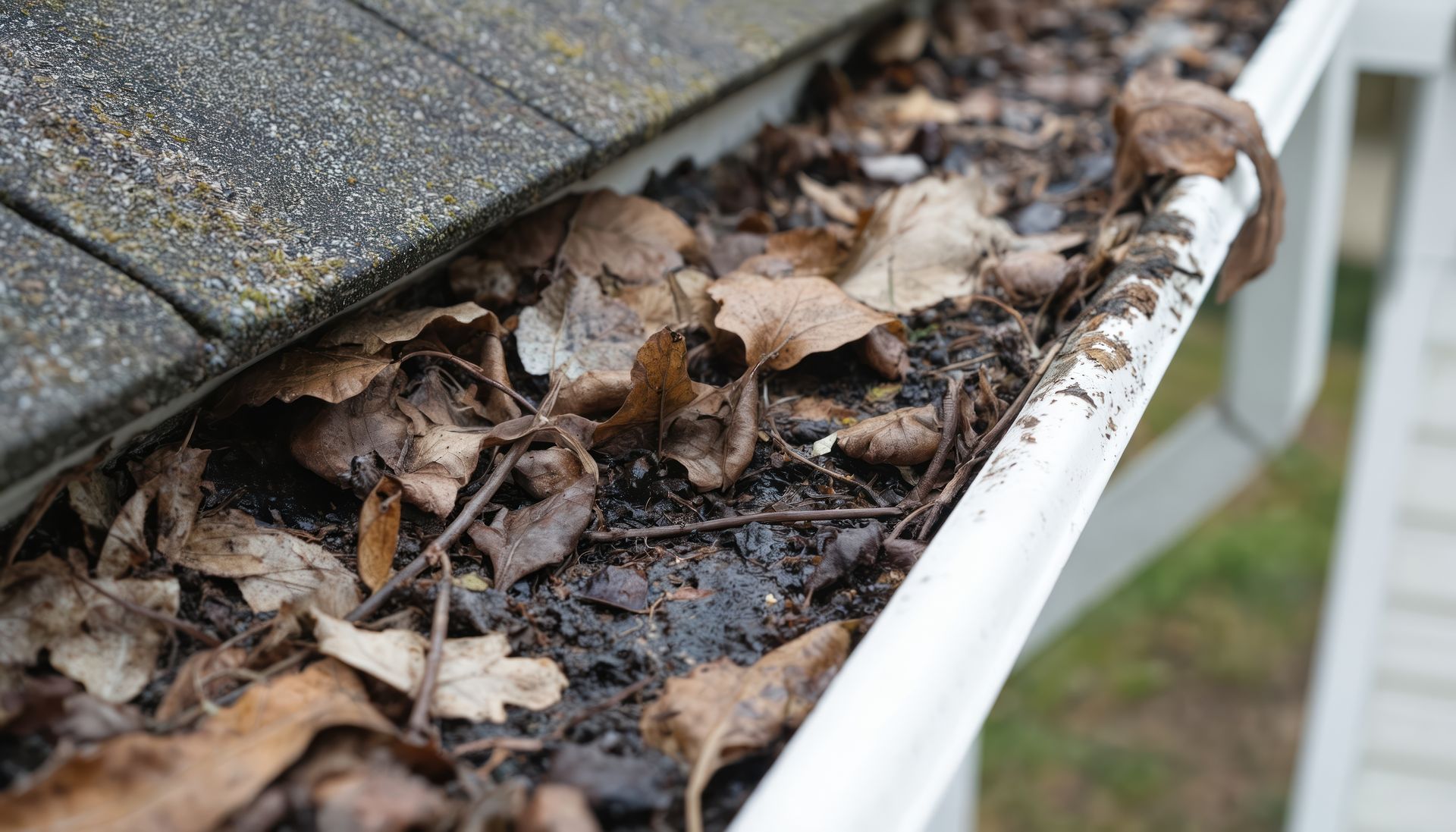
When Gutter Helmet of Denver speaks with homeowners who are ready to stop dealing with clogged gutters, the conversation almost always includes one question: what is the difference between gutter guards and leaf filters, and which one is actually worth the investment? It is a fair question, and the answer matters more in Denver and the surrounding Front Range than it does in most other parts of the country.
Colorado's combination of intense summer storms, pine needle accumulation, heavy snow loads, and extreme UV exposure creates conditions that expose the weaknesses of underperforming gutter protection systems faster than a mild climate ever would. A product that works adequately in the Pacific Northwest or the Southeast may fail consistently here. Understanding why requires a closer look at how these systems actually work and what they are designed to handle.
This comparison breaks down the key differences between gutter guard systems and leaf filter products, how each performs in Colorado's specific climate, and what Denver homeowners should prioritize when making this decision.
What the Terms Actually Mean
The gutter protection market uses terminology inconsistently, which creates genuine confusion for homeowners trying to compare products. Leaf filter, leaf guard, gutter guard, gutter cover, and gutter helmet are all terms that get used interchangeably in marketing materials, but they describe fundamentally different product categories with very different operating principles.
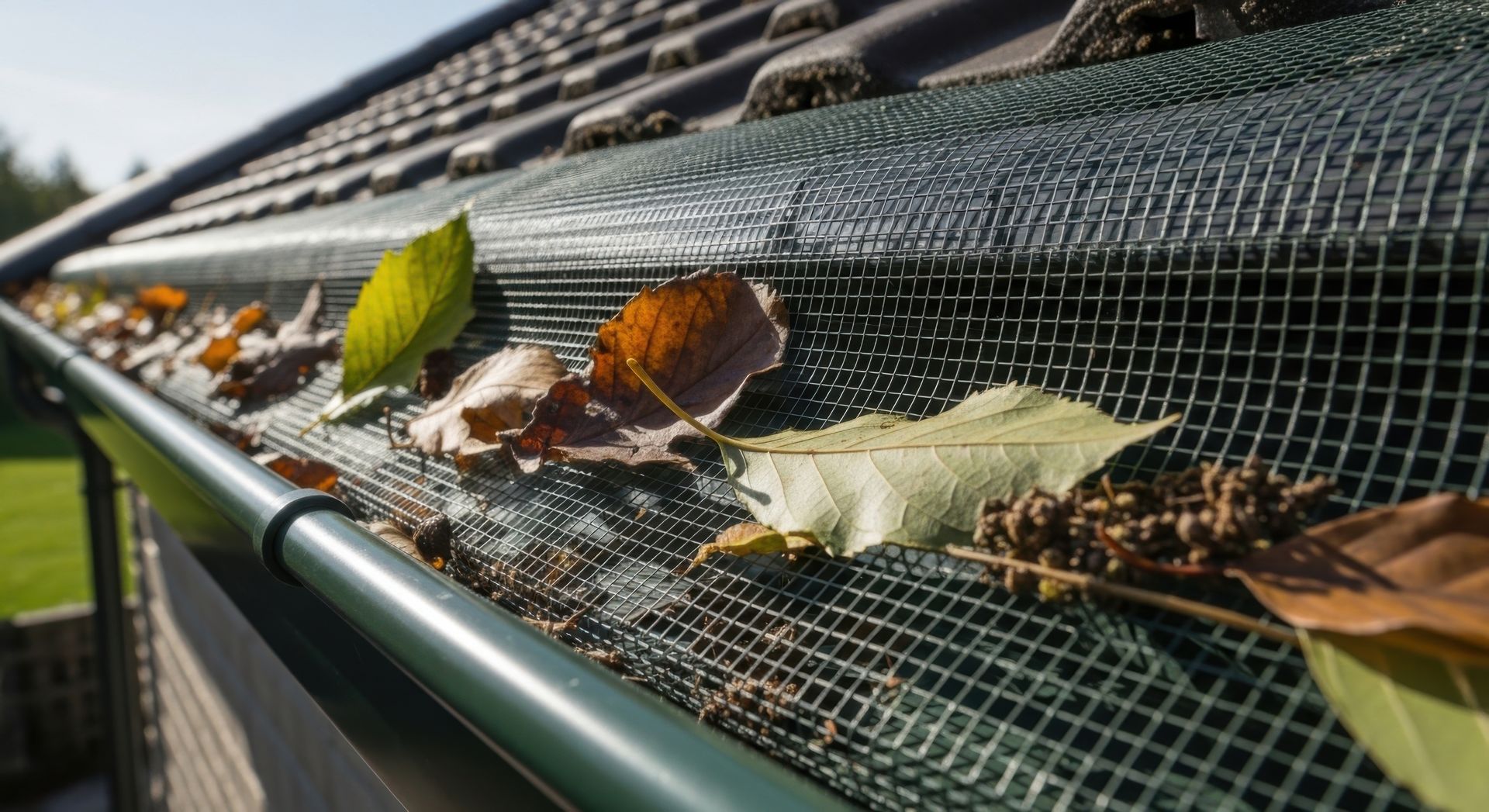
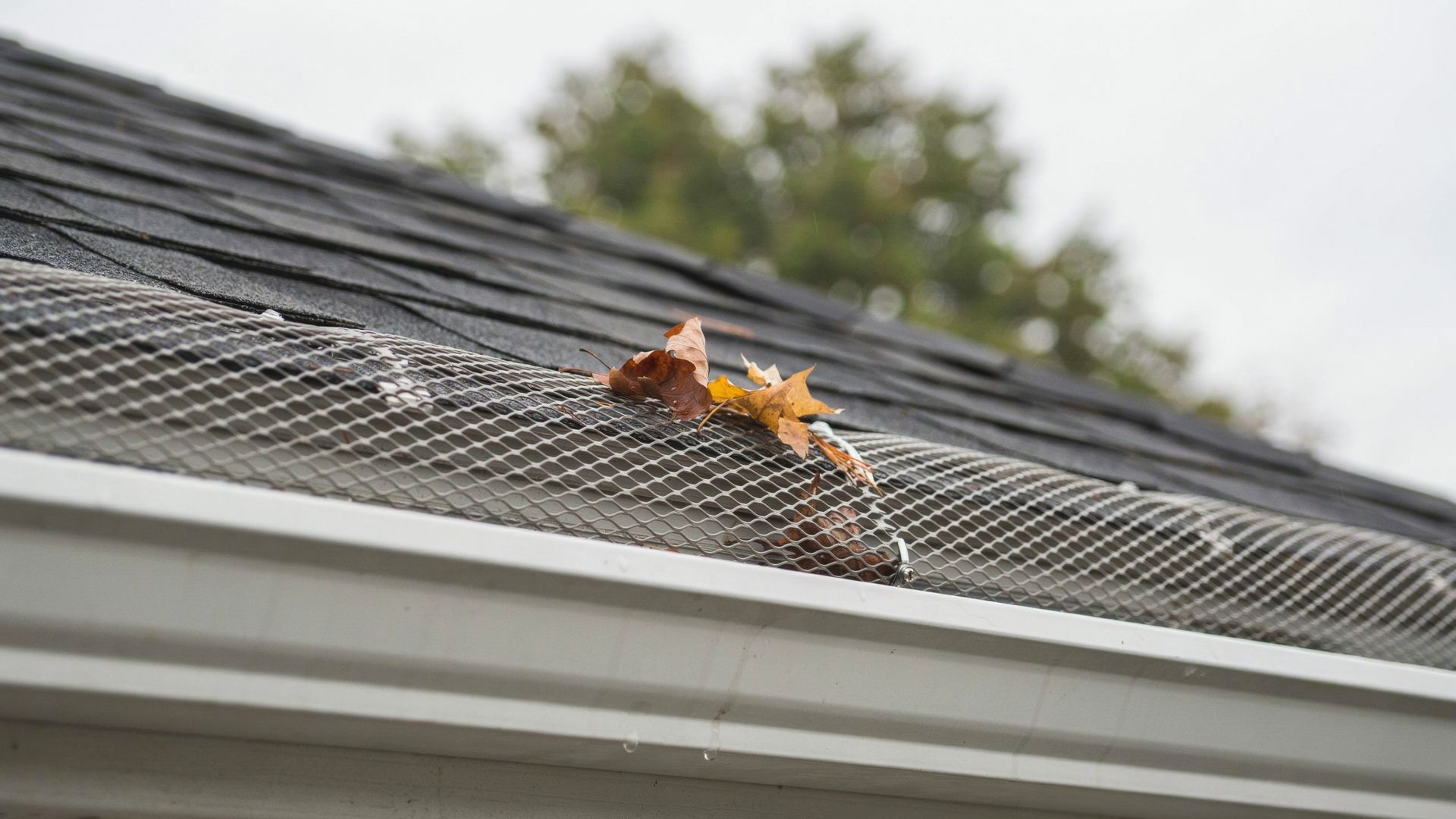
A leaf filter or micro-mesh product works by covering the gutter opening with a fine mesh screen that allows water to pass through while blocking debris. The theory is that small mesh openings let rain in but keep leaves, pine needles, and other debris out.
A solid-surface gutter cover works differently. Rather than filtering water through a mesh, it uses the physics of surface tension to guide water around a curved nose profile and into the gutter below, while debris travels over the edge and falls to the ground. There is no mesh to clog, no filter to maintain, and no opening large enough for debris to enter.
What makes Gutter Helmet different from leaf filter and screen mesh products is precisely this distinction. It is not a variation of the same product category. It is a different engineering approach entirely.
How Micro-Mesh and Leaf Filter Products Perform in Denver
Micro-mesh products have genuine strengths. They are effective at blocking large debris in moderate climates with predictable rainfall and primarily deciduous tree cover. In those conditions, they perform reasonably well and require less maintenance than open gutters.
Denver and the Front Range present a different set of conditions that expose the limitations of fine-mesh systems.
Pine Needle Accumulation
The most consistent failure mode for micro-mesh products in Colorado's foothill and mountain communities is pine needle accumulation. Ponderosa pine, lodgepole pine, and Douglas fir shed needles continuously throughout the growing season. Unlike broad leaves that sit on top of a mesh surface and blow off with wind, pine needles orient themselves lengthwise and slide into the mesh openings or lay flat across the surface, creating a mat that water cannot penetrate.
The result is that the mesh itself becomes the clog. Homeowners who install fine-mesh leaf filter products in pine-heavy environments often find themselves cleaning the exterior surface of the mesh as frequently as they previously cleaned the interior of their open gutters. The maintenance burden shifts rather than disappears. Gutter guards for pine needles require a surface-shedding design approach, not a filtration approach, to perform reliably in these conditions.
Colorado's High-Intensity Rainfall
Colorado's summer storm pattern delivers rainfall at intensities that fine-mesh products struggle to process. When an inch of rain falls in twenty minutes during a Front Range thunderstorm, the volume of water hitting the mesh surface exceeds the rate at which it can pass through the openings. The result is overflow, with water sheeting over the sides of the gutter rather than entering it.
This is not a theoretical failure mode. It is a documented limitation of micro-mesh systems in high-intensity rainfall environments, and Colorado's orographic storm pattern triggers it regularly. How Gutter Helmet's design handles heavy rainfall, by contrast, relies on surface tension rather than filtration, which means flow rate is not limited by the size of a mesh opening.
UV Degradation at Altitude
Denver sits at 5,280 feet, and many Front Range communities sit considerably higher. UV intensity increases with elevation, and the fine mesh materials used in many leaf filter products degrade faster at altitude than manufacturers' testing at sea level anticipates. Mesh that becomes brittle from UV exposure loses its structural integrity, develops gaps, and eventually fails to block the debris it was designed to stop.
How Solid-Surface Gutter Guards Perform in Denver
A solid-surface reverse-curve gutter guard addresses the specific failure modes that affect micro-mesh products in Colorado's climate directly.
There is no mesh to clog with pine needles because there is no mesh. The solid cover surface causes pine needles and debris to travel over the edge rather than accumulating on or in the system. There is no filtration bottleneck during high-intensity rainfall because water entry relies on surface tension mechanics rather than flow-through filtration. And the heavy-gauge aluminum construction resists UV degradation at Colorado's elevations far better than mesh or plastic components.
Gutter guards 101 explains how Gutter Helmet works differently from a mechanical standpoint, and those differences are directly relevant to how each system performs in Denver's specific environment.
The Wildfire Consideration
This is a comparison point that rarely comes up in national gutter guard reviews but is highly relevant to Denver and Front Range homeowners. During Colorado's wildfire season, wind-driven embers travel significant distances ahead of active fire fronts. Open mesh products leave a cavity inside the gutter where embers can land and ignite accumulated dry debris.
A solid-surface cover eliminates this risk entirely. There is no open cavity, no accumulated debris inside the gutter, and no ignition pathway for wind-driven embers. The Marshall Fire demonstrated exactly why keeping gutters clear of flammable material matters in Colorado communities, and a solid cover addresses this risk in a way that mesh products simply cannot.
Installation Quality and Warranty Differences
Product design is only part of the comparison. Installation quality and warranty terms complete the picture.
Many leaf filter and micro-mesh products are sold through national franchises or big-box retail channels, where installation quality varies significantly by location and crew. Warranty terms for these products often cover materials but not performance, meaning a system that physically holds together but fails to keep debris out may not be covered by the warranty in practice.
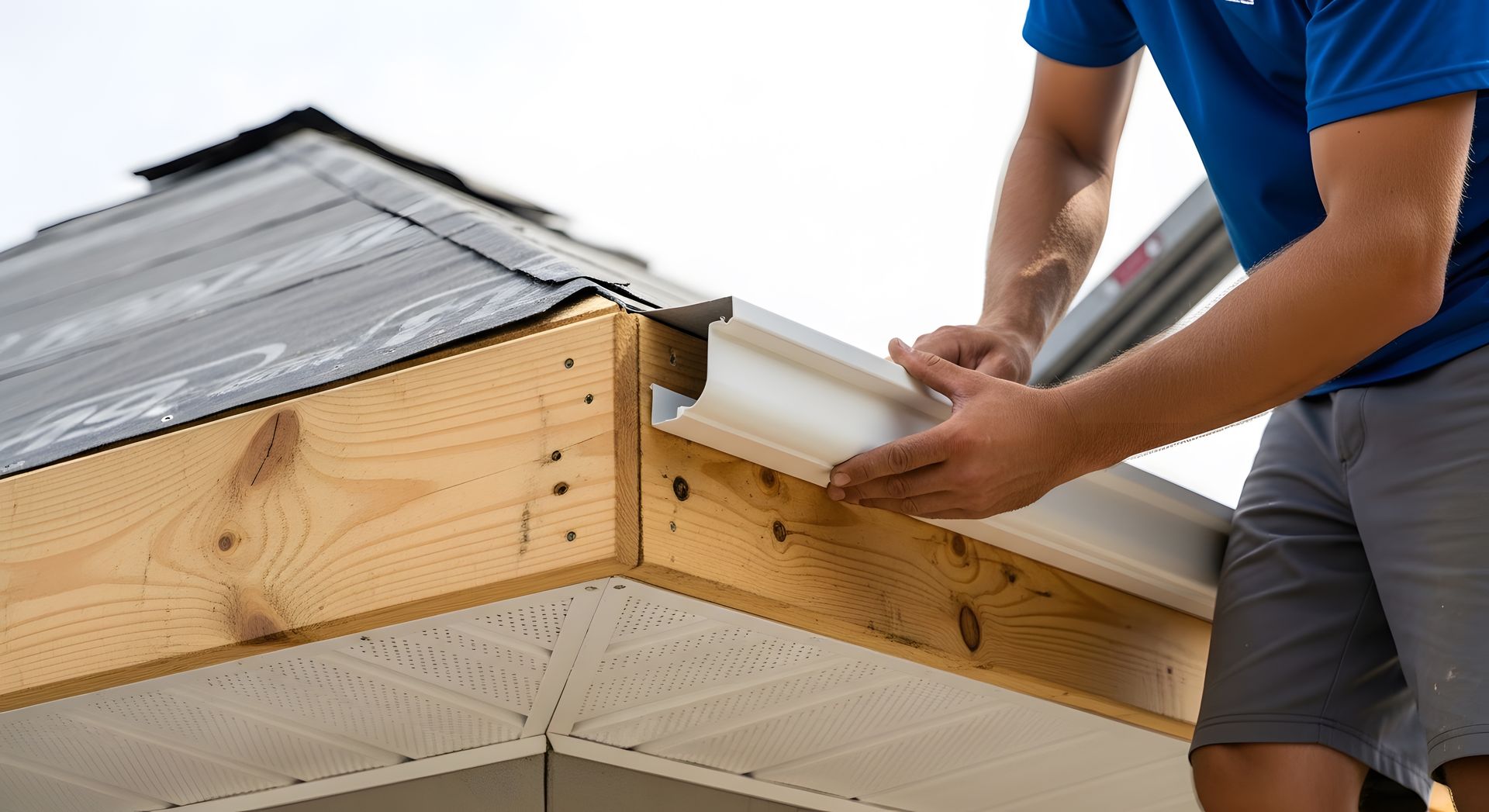
Why professional gutter installation matters for longevity and performance is a consideration that applies equally to product selection and installer selection. A well-engineered product installed carelessly will underperform, and a warranty that doesn't cover performance leaves the homeowner without recourse when it does.
Cost Comparison: What You Are Actually Paying For
Micro-mesh and leaf filter products span a wide price range, from inexpensive DIY options to professionally installed premium systems. The installed cost of a quality micro-mesh system and a solid-surface gutter guard system are often comparable at the premium end of each category.
The more meaningful cost comparison is total cost of ownership over ten or fifteen years. A system that requires periodic mesh cleaning, degrades from UV exposure, or fails to prevent pine needle clogs in a foothill environment will accumulate maintenance and repair costs that a more durable system avoids. The ROI of gutter guards for Denver homes looks very different when the full cost picture is considered rather than just the installation price.
Side-by-Side Summary
Micro-mesh and leaf filter products work well in moderate climates with primarily deciduous debris and average rainfall intensity. In Denver and the Front Range, their key limitations are pine needle clogging on the mesh surface, overflow during high-intensity summer storms, UV degradation at elevation, and open mesh cavities that present wildfire ember risk.
Solid-surface reverse-curve systems like Gutter Helmet address each of these limitations directly. They shed pine needles rather than filtering them, handle high-flow storm events through surface tension mechanics rather than filtration, use materials rated for high-altitude UV exposure, and eliminate the open gutter cavity that presents ember risk during fire season.
For Denver homeowners specifically, the environmental conditions that matter most in this comparison all point in the same direction. How Denver homeowners rate Gutter Helmet based on real local experience reflects what the product comparison predicts: a solid-surface system built for demanding conditions outperforms fine-mesh alternatives in Colorado's climate consistently.
Frequently Asked Questions About Gutter Guards vs Leaf Filters for Denver Homes
Is a leaf filter the same thing as a gutter guard?
Not exactly. Leaf filter is a category of gutter protection product that uses fine mesh to filter debris out of water entering the gutter. Gutter guard is a broader term that includes multiple product types, including solid-surface reverse-curve systems that work on an entirely different principle. The distinction matters because the two approaches have very different performance profiles in Colorado's climate.
Why do micro-mesh products struggle with pine needles?
Pine needles are long and thin, which allows them to orient lengthwise and either slide into mesh openings or lay flat across the mesh surface in a way that blocks water flow. Unlike broad leaves that tend to sit loosely on a mesh surface and blow off, pine needle mats compact and hold moisture, creating a persistent clog on the exterior of the mesh itself. A solid-surface system avoids this problem entirely because there is no mesh for pine needles to clog.
Can a leaf filter handle Colorado's summer thunderstorms?
Fine-mesh products have a maximum flow rate determined by the size and density of their mesh openings. During Colorado's high-intensity summer storms, rainfall volume can exceed that flow rate, causing water to sheet over the sides of the gutter rather than entering through the mesh. Solid-surface systems that use surface tension mechanics rather than filtration are not subject to the same flow rate limitation.
Does the wildfire risk in Colorado affect which gutter guard I should choose?
Yes, and it is an underappreciated consideration. Mesh products leave an open cavity inside the gutter where wind-driven embers can collect and ignite accumulated debris. A solid-surface cover eliminates that cavity entirely. For homeowners in Wildland-Urban Interface zones along the Front Range and in foothill communities, this is a meaningful safety distinction beyond the standard performance comparison. Protecting your home from wildfires with Gutter Helmet addresses this risk directly.
Are premium leaf filter products worth the higher price in Denver?
Premium micro-mesh products are better engineered than budget alternatives, but the fundamental limitations of the mesh design in Colorado's environment apply regardless of price point. Pine needle accumulation, high-intensity rainfall overflow, and UV degradation at altitude are design-category limitations, not quality-tier limitations. A better-built mesh product still relies on filtration, which is the characteristic that creates performance issues in Denver's specific conditions.
How do I know which gutter guard is right for my specific home?
The most reliable answer comes from an on-site assessment that accounts for your roof pitch, tree coverage, local storm exposure, and existing gutter condition. General product comparisons are useful for understanding the category differences, but the right system for a heavily forested foothill property at 7,000 feet may be different from the right system for a Denver neighborhood home with moderate tree cover. Schedule a free consultation to get a recommendation based on your actual conditions.
See the Difference for Yourself
The best way to understand how Gutter Helmet performs compared to leaf filter alternatives is to see it assessed against your specific home. Contact Gutter Helmet of Denver to schedule your free on-site consultation and get a straight answer on which system is right for your property.
You might also like